From industrial waste to hardened data vault
Serene DC vaults are built from geopolymer — a high-performance structural material
made not from Portland cement, but from industrial by-products, activated by our
proprietary RGL formulation. Stronger than conventional concrete, cured in hours
rather than weeks, and cast into transportable modules, it assembles into hardened,
thermally self-buffering data vaults. This is that material’s journey.
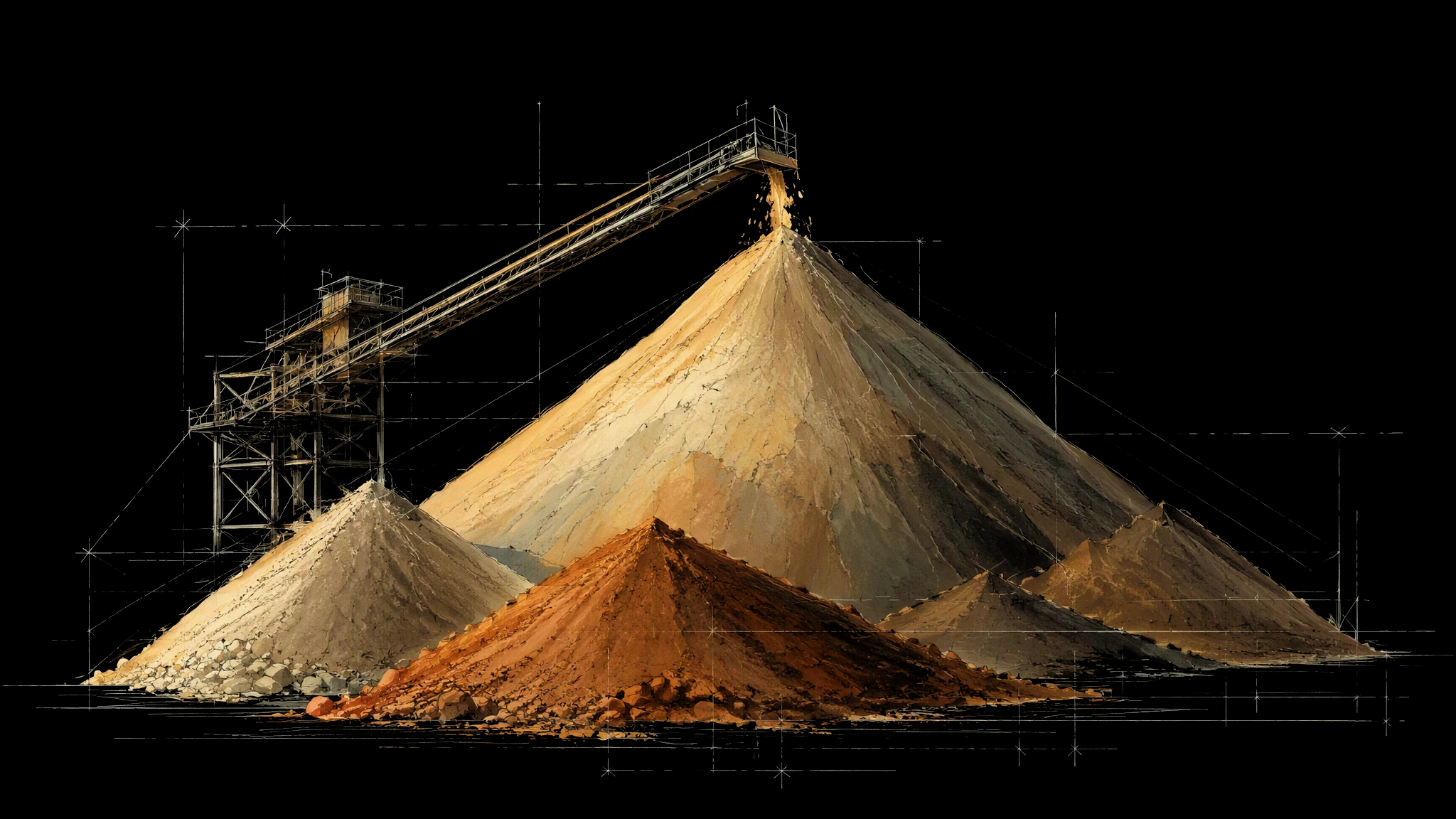
It starts as waste
Every vault begins as stockpiles of industrial by-product — material left over by
the steel, power and alumina industries and otherwise destined for long-term
storage. Sourced from heavy industry in the regions where we build, at nominal
cost, it displaces virgin cement entirely. The result is a structural material
with up to 80% less embodied carbon than conventional concrete — and a measurable
Scope 3 reduction for every operator inside the building.
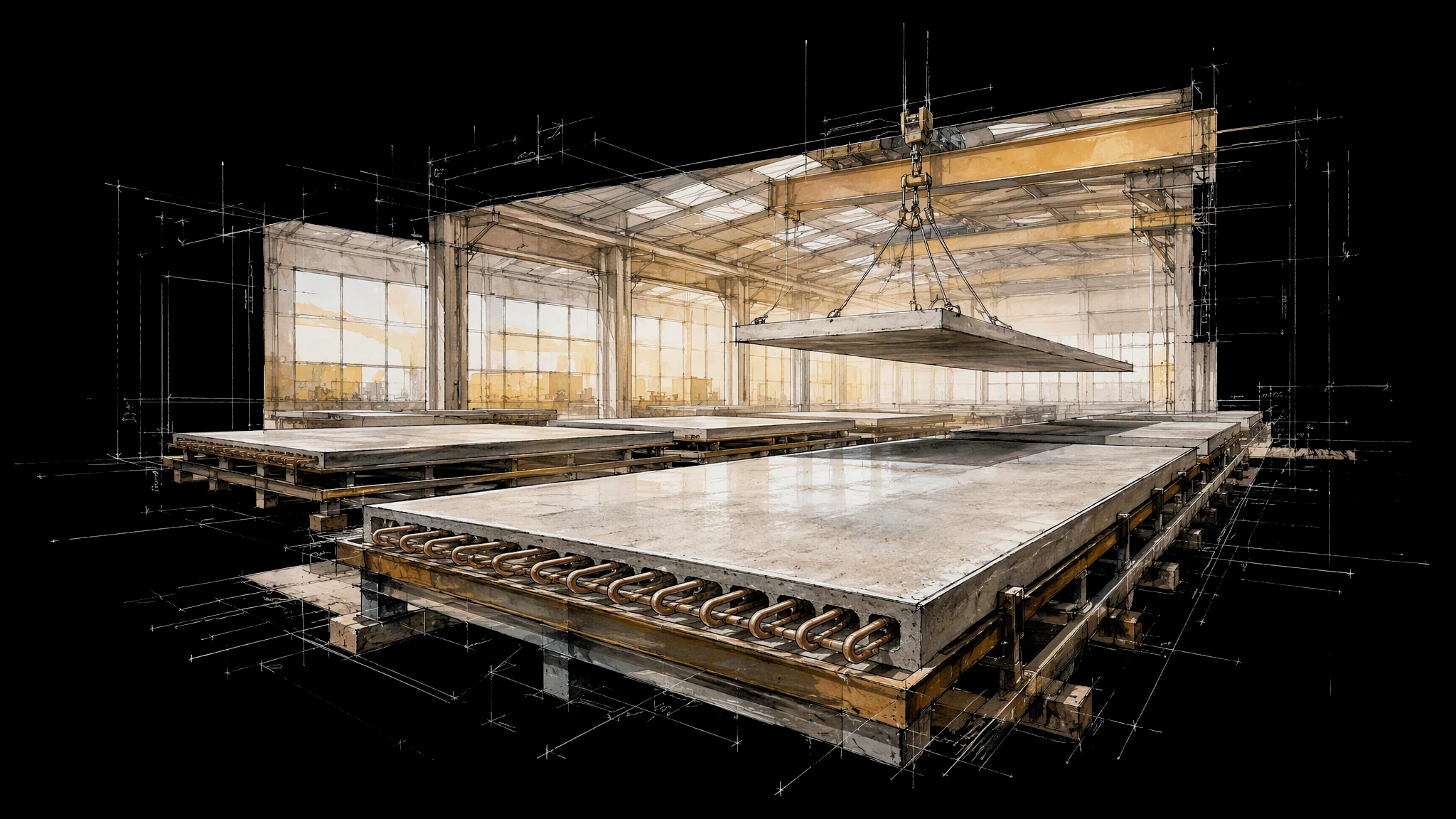
Cast for performance
Blended with our RGL activator and cast on precision tables, the material reaches
demoulding strength within 24 hours at ambient temperature — no steam curing, no
autoclaves — and 40–50 MPa at 28 days. Cooling coils are embedded directly into
each panel as it cures, turning the walls themselves into a thermal battery.
Finished panels are sealed and shipped as transportable modules, ready for rapid
crane-line assembly wherever they are needed.
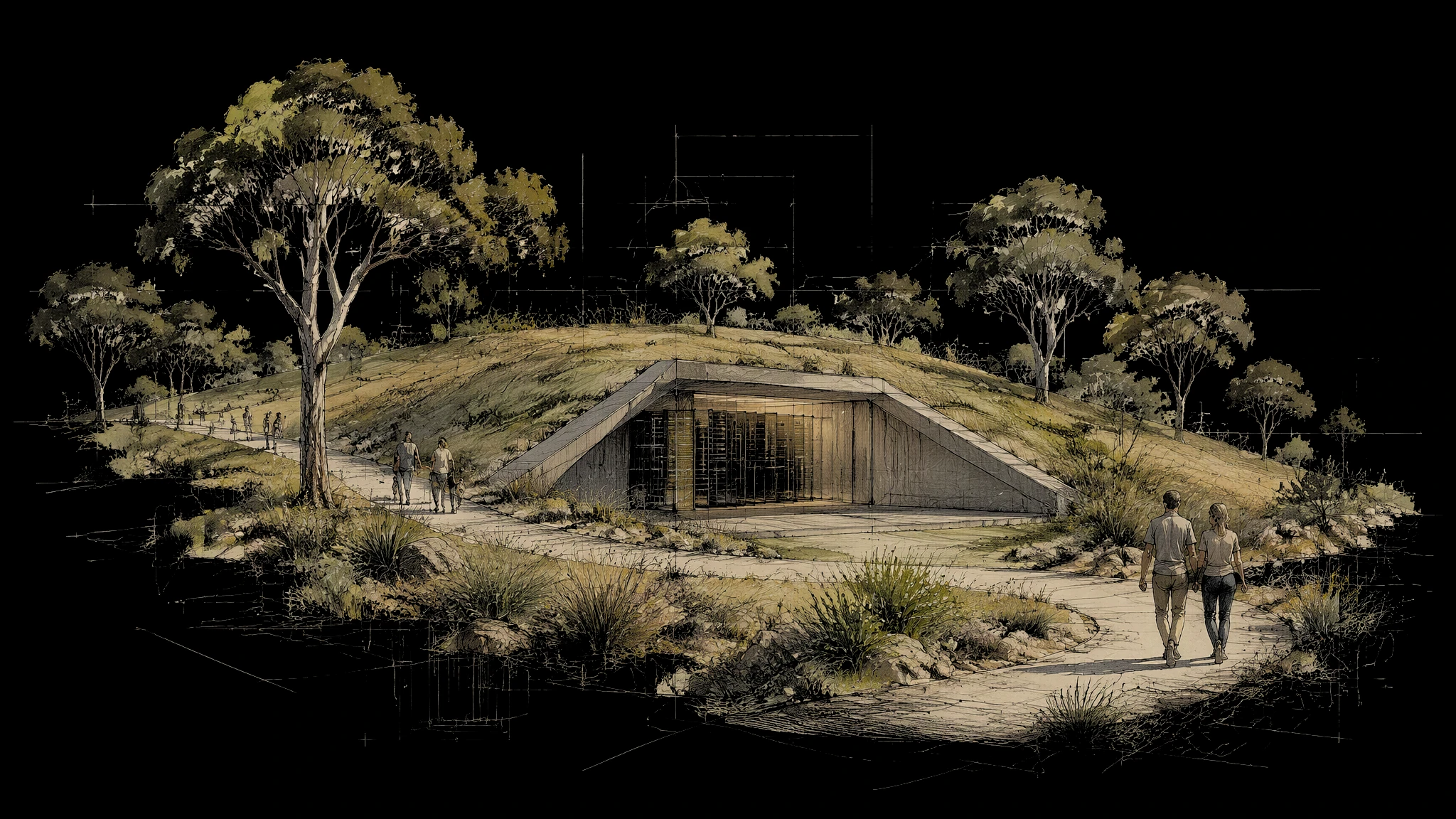
Infrastructure that disappears — and endures
The finished vault is earth-integrated and vegetated — a fraction of the height
and footprint of a conventional data centre, sitting below the tree line with
native planting and walking trails overhead, and racks serviced autonomously
from above. Inside, the dense structure buffers server heat to a stable 40°C
sweet spot, with structural ambient limits of 60°C. Outside, the bunker-grade
shell is engineered to resist blast and kinetic impact. Data infrastructure
built for communities — and for the world’s harder places.
The advantages, quantified
Stronger than concrete
40–50 MPa at 28 days, with 15–20 MPa reached within 24 hours of casting at ambient temperature.
Faster to deploy
Transportable pre-cast modules and quick-connect services assemble by crane line in days, not months.
Cheaper to build and run
Up to 60% less capital expenditure and up to 55% less operating expenditure than conventional facilities.
A structural heat sink
Embedded cooling arrays let the walls absorb server heat directly, holding a 40°C operating sweet spot and shrinking mechanical plant.
Up to 80% less embodied carbon
Industrial by-products replace Portland cement — near-zero-carbon structure with a measurable Scope 3 benefit.
Kinder to communities
Earth-integrated, vegetated structures with low sight lines and a small land footprint replace multi-storey industrial shells — infrastructure a neighbourhood doesn’t have to look at.
Hardened by design
The bunker-grade shell resists spalling, blast and kinetic impact — engineered for sovereign deployments and regions of conflict.
Waste into value
Regional by-products become permanent infrastructure — sourced locally, cast locally, and cleaning up the industrial landscape as it builds.